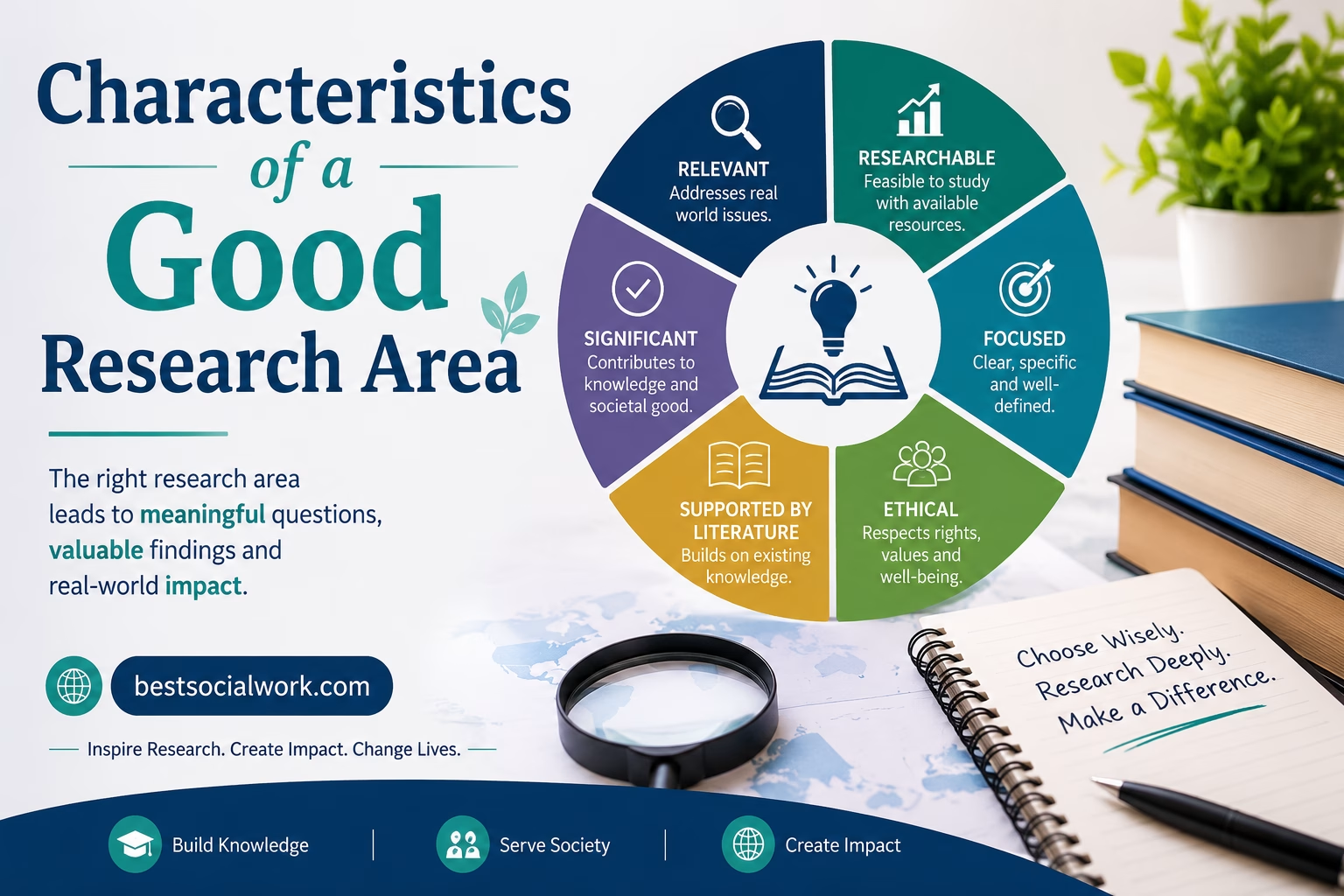
Characteristics of a Good Research Area
Research Area
A research area is the broad field, subject, or domain of knowledge that a researcher selects for systematic investigation. It provides the overall framework within which specific research problems, questions, and objectives are identified and examined. As the general topic or discipline of study, a research area defines the scope and direction of the research, helping the researcher focus on particular issues, phenomena, populations, or areas of interest. It serves as the foundation of the research process and guides the development of research questions, hypotheses, and methodologies.
Characteristics of a Good Research Area
Determining a “good” research area involves selecting a field of study that is both personally motivating and academically viable. While a research area represents a broad domain of interest, its quality is often judged by how effectively it can be narrowed down into a specific, researchable problem. Following are some of the characteristics of a good research area.
· Feasible and Manageable Scope
A good research area should have a feasible and manageable scope, meaning it must be realistic to study within the available time, budget, resources, and research skills of the researcher. If the scope is too broad, the study becomes difficult to complete and may lead to superficial findings, whereas a well-defined and limited scope allows for in-depth analysis and accurate results. Feasibility also includes access to data, respondents, and research settings. For example, instead of selecting a broad topic like “Unemployment in Nepal,” which is too large to study effectively, a more feasible and manageable research area would be “Unemployment and seasonal migration among youth in Sudurpaschim Province.” This narrower focus makes it easier to collect data, analyze findings, and draw meaningful conclusions within a specific context.
· Alignment with Modern Trends
A good research area should align with modern trends, meaning it should reflect current issues, emerging challenges, and contemporary developments in society, technology, economy, or social systems. Such alignment ensures the research remains relevant, timely, and useful for policy formulation and practical intervention. Research areas connected to modern trends are more likely to attract attention from academic institutions, funding agencies, and practitioners because they address evolving social realities. For example, instead of focusing only on traditional issues like general poverty, a modern trend-based research area could be “The impact of social media use on the mental health of adolescents in Nepal.” This topic reflects the growing influence of digital technology in everyday life and addresses a current social and psychological concern.
· Novelty and Originality
A good research area should possess novelty and originality, meaning it should introduce new ideas, explore unexplored issues, or provide a fresh perspective on existing problems. This characteristic is important because research is expected to contribute to the existing body of knowledge rather than merely repeating what has already been studied. A novel and original research area helps to fill gaps in literature, generate new understanding, and support innovation in theory and practice. For example, instead of repeatedly studying general “domestic violence against women,” a more original research area could be “Psychosocial impact of cyber harassment on female college students in Nepal.” This topic is more specific, contemporary, and less explored, thereby adding new insights to the field of social work research.
· Presence of a “Research Gap”
A good research area should be based on a clearly identified research gap, meaning it should address issues, questions, or aspects that have not been sufficiently studied or fully explained in existing literature. Identifying a research gap ensures that the study contributes new knowledge rather than repeating already established findings. It helps the researcher to justify the importance of the study and demonstrate its academic and practical value. A research area with a clear gap also guides the formulation of specific research objectives and improves the originality of the work. For example, while there may be many studies on migration in Nepal, a research gap may exist in understanding “the mental health experiences of left-behind elderly parents of migrant workers in rural Nepal.” This focuses on an under-researched population and adds new insight into the social and emotional consequences of migration.
· Researchable and Measurable
A good research area should be researchable and measurable, meaning it must be suitable for scientific investigation using systematic methods such as observation, surveys, interviews, or statistical analysis. A researchable area allows the researcher to collect empirical data and analyze it in a clear and objective manner, while measurability ensures that the variables or concepts involved can be defined in observable and quantifiable terms. If a topic is vague, abstract, or cannot be operationalized, it becomes difficult to conduct valid research. For example, instead of selecting a broad and unmeasurable topic like “happiness in life,” a more researchable and measurable area would be “the level of life satisfaction among working women in Nepalgunj measured using a standardized scale.” This makes it possible to gather data, apply measurement tools, and draw reliable conclusions.
· Ethically Sound
A good research area should be ethically sound, meaning it must respect the dignity, rights, privacy, and well-being of all participants involved in the study. Ethical acceptability ensures that the research does not cause physical, psychological, social, or emotional harm to individuals or communities. It also requires informed consent, confidentiality, voluntary participation, and protection of vulnerable groups such as children, women, and marginalized populations. Research areas that involve sensitive issues must be carefully designed to avoid exploitation or harm. For example, while studying substance abuse, an ethically sound research area could be “Factors influencing alcohol use among adults in a community in Nepalgunj,” where participants are treated respectfully and their identities are kept confidential. In contrast, directly exposing or stigmatizing individuals with addiction problems would not be ethically appropriate.
· Resource Availability
A good research area should consider the availability of resources, meaning that the researcher must ensure the necessary time, financial support, human resources, and materials are accessible to successfully complete the study. Adequate resources are essential for data collection, field visits, analysis, and reporting. If resources are limited, even an interesting topic may become impractical or incomplete. Therefore, a research area should be selected in accordance with the researcher’s capacity and institutional support. For example, a study on “Mental health services in all provinces of Nepal” may require extensive time and high funding, making it difficult for a student researcher. In contrast, “Availability and utilization of mental health services in Kanchanpur District” is more realistic and manageable within limited resources.
· Personally Motivating and Engaging
A good research area should be personally motivating and engaging, meaning it should reflect the researcher’s genuine interest, curiosity, and commitment toward the subject of study. When a researcher is personally motivated, they are more likely to remain focused, invest time and effort, and overcome challenges throughout the research process. Such engagement also enhances creativity, depth of understanding, and the quality of analysis. A lack of interest may lead to incomplete work or superficial findings. For example, a student who is passionate about community issues may choose a research area like “The role of youth participation in community development activities in Mahendranagar,” which aligns with their personal interest and encourages active involvement in data collection and analysis.
· Aligned with Future Career Goals
A good research area should be aligned with the researcher’s future career goals, meaning it should support the development of relevant knowledge, skills, and experience needed for their professional growth. When a research topic is connected to future aspirations, it enhances motivation, improves expertise in the chosen field, and strengthens academic and career opportunities. Such alignment also helps the researcher build a strong foundation for advanced studies or employment in a specific sector. For example, if a student aims to become a mental health social worker, selecting a research area like “Psychosocial challenges among adolescents in Kanchanpur District” is highly beneficial, as it directly relates to mental health practice and provides practical exposure to issues they may deal with in their future profession.
Research Methods in Social Work
Discover more from Best Social Work
Subscribe to get the latest posts sent to your email.
https://shorturl.fm/slz1X
https://shorturl.fm/1lQRy
https://shorturl.fm/gQaMc
https://shorturl.fm/xtPqs
https://shorturl.fm/3WVK9
https://shorturl.fm/YQKk8
https://shorturl.fm/ODlSN
https://shorturl.fm/r79wU
https://shorturl.fm/N29Vf
https://shorturl.fm/VQg2Q
https://addlinks.pro/A1yQm
Solid platform with a very intuitive design. It doesn’t feel cluttered and I can find my favorite games in seconds. br11ccbet
https://addlinks.pro/QrOy5
Login process is super quick and the customer support is actually helpful. Really happy with the experience at bjbaji777login.