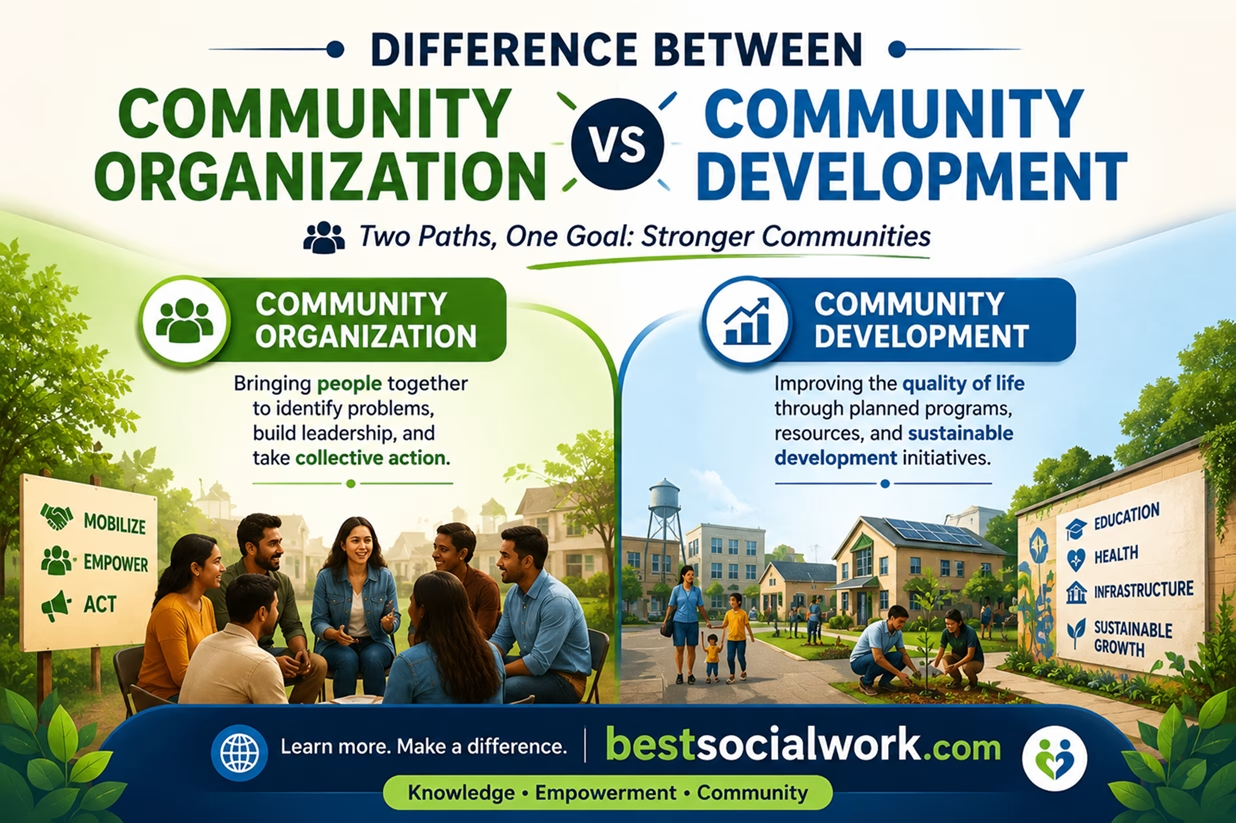
Difference between Community Organization and Community Development
Community organization and community development are two important concepts in social work and community practice. Both aim to improve the welfare of people and strengthen communities, but they differ in their objectives, methods, scope, and outcomes. Community organization focuses primarily on mobilizing people, building collective action, and solving common problems through participation, while community development emphasizes long-term social, economic, cultural, and environmental improvement of a community. Although these concepts are closely related and often used together, understanding their differences is essential for social workers, development practitioners, policymakers, and community leaders.
Communities face various challenges such as poverty, unemployment, social exclusion, inadequate infrastructure, environmental degradation, and lack of access to education and health services. Addressing these issues requires organized efforts and planned interventions. Community organization and community development provide two complementary approaches to achieving community well-being. Community organization helps people unite and identify their common concerns, whereas community development focuses on creating sustainable changes that improve the overall quality of life.
Meaning of Community Organization
Community organization is a method of social work that involves bringing people together to identify their common needs, problems, and interests and to take collective action to address them. It is a process through which community members develop cooperation, leadership, and participation in solving their own problems. The primary purpose of community organization is to strengthen people’s capacity to work together and influence decisions affecting their lives.
Community organization emphasizes democratic participation, social justice, empowerment, and collective responsibility. It seeks to mobilize local resources, encourage community involvement, and develop local leadership. Through meetings, awareness campaigns, advocacy efforts, and group action, community members become active participants in decision-making and problem-solving.
According to social work scholars, community organization is a planned process of helping community members identify their needs and work collectively toward achieving desired goals. It is both a process and a method that promotes social change through organized efforts.
Objectives of Community Organization
· Identifying community needs and problems.
· Promoting community participation.
· Developing local leadership.
· Strengthening community unity and cooperation.
· Mobilizing available resources.
· Creating awareness about rights and responsibilities.
· Empowering marginalized and disadvantaged groups.
· Facilitating collective action for social change.
Characteristics of Community Organization
· People-centered approach.
· Democratic decision-making.
· Collective action and participation.
· Emphasis on empowerment.
· Problem-solving orientation.
· Development of local leadership.
· Focus on social justice and equity.
· Utilization of local resources.
Importance of Community Organization
· Encourages active citizenship.
· Strengthens democratic values.
· Promotes social justice.
· Develops leadership skills.
· Enhances community solidarity.
· Increases people’s capacity to solve problems.
· Empowers vulnerable populations.
· Facilitates collective decision-making.
Challenges in Community Organization
· Lack of participation.
· Leadership conflicts.
· Social divisions based on caste, ethnicity, or gender.
· Limited awareness and education.
· Resource constraints.
· Political interference.
Meaning of Community Development
Community development is a broader and long-term process aimed at improving the economic, social, cultural, political, and environmental conditions of a community. It seeks to enhance the quality of life of community members by increasing their capacity, opportunities, and access to resources.
Community development involves planned efforts by community members, governments, NGOs, and other stakeholders to bring about sustainable improvements. It focuses not only on solving immediate problems but also on creating conditions that enable communities to thrive and become self-reliant.
The concept gained international recognition after World War II when governments and development agencies began promoting rural development and poverty reduction programs. Today, community development encompasses a wide range of activities including education, health promotion, infrastructure development, environmental conservation, income generation, women’s empowerment, and social inclusion.
Objectives of Community Development
· Improving living standards.
· Reducing poverty and inequality.
· Promoting economic growth and employment.
· Enhancing education and health services.
· Strengthening community capacity and self-reliance.
· Encouraging social inclusion and equity.
· Improving infrastructure and public services.
· Ensuring sustainable development.
Characteristics of Community Development
· Long-term orientation.
· Holistic approach.
· Focus on sustainability.
· Involvement of multiple stakeholders.
· Emphasis on capacity building.
· Economic and social transformation.
· Resource mobilization and management.
· Improvement in quality of life.
Importance of Community Development
· Reduces poverty and inequality.
· Creates employment opportunities.
· Improves health and education.
· Strengthens local institutions.
· Enhances social cohesion.
· Promotes sustainable resource use.
· Increases community resilience.
· Improves infrastructure and public services.
Challenges in Community Development
· Insufficient funding.
· Weak institutional capacity.
· Dependency on external support.
· Lack of sustainability.
· Unequal distribution of benefits.
· Environmental and climate-related challenges.
Relationship Between Community Organization and Community Development
Community organization and community development are interconnected. Community organization often serves as the foundation for community development. Before a community can undertake development activities, people must be organized, motivated, and united around common goals. Community organization creates the social structure and participation necessary for successful development initiatives.
For example, if a village wants to improve its drinking water system, community organization helps residents identify the problem, form committees, and mobilize participation. Community development then involves planning, obtaining resources, constructing facilities, and ensuring long-term maintenance.
Thus, community organization can be viewed as a means, while community development is often considered the broader end goal.
Differences Between Community Organization and Community Development
- Community organization is a process of mobilizing people to identify and solve common problems through collective action. Community development is a process of improving the overall social, economic, and environmental conditions of a community.
- Community organization focuses on organizing people and promoting participation. Community development focuses on improving community well-being and quality of life.
- Community organization is primarily a social work method and process. Community development is a broader development strategy and approach.
- The goal of community organization is collective action and empowerment. The goal of community development is sustainable social and economic progress.
- Community organization often addresses immediate or short-term issues while building long-term capacity. Community development generally focuses on long-term transformation and sustainable change.
- Community organization has a relatively narrower scope centered on people, groups, and social action. Community development has a wider scope that includes economic development, infrastructure, education, health, governance, and environmental sustainability.
- Community organization uses participation, awareness, advocacy, and mobilization. Community development uses planning, resource allocation, capacity building, and implementation of development projects.
- Community organization emphasizes the development of local leadership and grassroots participation. Community development may involve local leaders, government officials, NGOs, technical experts, and donors.
- Community organization focuses on mobilizing human and social resources within the community. Community development utilizes both local and external resources, including financial and technical support.
- The outcome of community organization is increased participation, empowerment, and collective action. The outcome of community development is improved living conditions, infrastructure, services, and opportunities.
- In community organization, the social worker acts as an organizer, facilitator, mediator, and advocate. In community development, the social worker may act as a planner, coordinator, educator, facilitator, and development practitioner.
- Community organization relies heavily on community-based and democratic decision-making. Community development may involve both community participation and institutional planning.
Conclusion
Community organization and community development are complementary approaches that contribute significantly to social progress and community well-being. Community organization focuses on mobilizing people, fostering participation, and empowering communities to address their common concerns. Community development, on the other hand, seeks long-term improvement in the social, economic, cultural, and environmental conditions of communities.
While community organization emphasizes collective action and grassroots participation, community development focuses on sustainable transformation and quality of life improvement. Community organization often acts as the foundation upon which community development initiatives are built. Together, they enable communities to become more self-reliant, democratic, resilient, and capable of achieving their development goals.
For social workers and development practitioners, understanding the distinctions and connections between these two concepts is essential for designing effective interventions that promote both community empowerment and sustainable development.
8 Definition of Community Organization
Discover more from Best Social Work
Subscribe to get the latest posts sent to your email.
https://pesnimp3.net/2.html
https://shorturl.fm/RUEPi
https://shorturl.fm/50vOY
https://shorturl.fm/S2Kpt
https://addlinks.pro/SFBV2
I have been searching for a mobile friendly betting site that actually works well on my phone and this checked all the boxes. The login is instant and the daily bonuses give me a nice extra edge. Support responded quickly on chat and guided me through my first deposit. Very pleased with the whole setup. okibetlogin